I had to leave a comment, because Michel’s story is not well-known.
Michel Valdrighi is the GOAT. His elegant code and impeccable aesthetic paved the path for WordPress to follow, and he did it with a prescient belief in Open Source. It seems obvious now, but in 2001, software that wasn’t just free but gave you Freedom was a radical idea that made people look at you funny. He showed me that code could be poetry, that beauty in simplicity is harder to achieve than complexity.
https://www.studiogiarola.it/wp-content/uploads/2026/05/logo-giarola.png00Albertohttps://www.studiogiarola.it/wp-content/uploads/2026/05/logo-giarola.pngAlberto2026-08-05 10:18:242026-08-05 10:18:24Matt: Michel the GOAT
This episode discusses the impact of artificial intelligence on human skills and connections, emphasizing concerns about overdependence on technology, authenticity in communication, and the importance of retaining essential human abilities.
https://www.studiogiarola.it/wp-content/uploads/2026/05/logo-giarola.png00Albertohttps://www.studiogiarola.it/wp-content/uploads/2026/05/logo-giarola.pngAlberto2026-08-04 10:22:592026-08-04 10:22:59Open Channels FM: Open Minds Balancing AI Innovation with Authentic Human Connection
New artist I’m obsessed with: Gabriel Dawe. I love the colors and craft, very Mesh. If his site were on WordPress, we’d definitely commission some pieces. Hat tip: Jason Nichols.
https://www.studiogiarola.it/wp-content/uploads/2026/05/logo-giarola.png00Albertohttps://www.studiogiarola.it/wp-content/uploads/2026/05/logo-giarola.pngAlberto2026-08-04 10:22:592026-08-04 10:22:59Matt: Gabriel Dawe
Digital identity is rapidly evolving due to AI and new authentication methods, necessitating secure access and robust management for both users and automated agents.
https://www.studiogiarola.it/wp-content/uploads/2026/05/logo-giarola.png00Albertohttps://www.studiogiarola.it/wp-content/uploads/2026/05/logo-giarola.pngAlberto2026-08-04 10:22:592026-08-04 10:22:59Open Channels FM: The Evolving Landscape of Digital Identity and AI
Founder Bob Dunn rebranded his @BobWP account to @OCFMNews for Open Channels News, expecting existing followers to appreciate the new focus on news and podcast content.
https://www.studiogiarola.it/wp-content/uploads/2026/05/logo-giarola.png00Albertohttps://www.studiogiarola.it/wp-content/uploads/2026/05/logo-giarola.pngAlberto2026-08-03 11:10:572026-08-03 11:10:57Open Channels FM: Follow Open Channels News on X @OCFMNews
In episode 133 of the Gutenberg Changelog Podcast, Birgit Pauli-Haack hosts Faith Ruth Imokol, a Ugandan web developer and longtime Gutenberg advocate, to discuss the Gutenberg 23.6 release and the upcoming WordPress 7.1 update. The episode opens with insights into the WordPress community in Uganda, highlighting their active WordCamp scene and educational initiatives such as the Campus Connect program, which introduces WordPress to students across the country.
Faith Imokol shares her experience on a recent WordCamp Kampala panel about AI in web development, noting divided perspectives: while some Ugandans are excited about AI’s possibilities, others are concerned about job security and adaptation. She describes her personal transition into using AI as a collaborative development tool, driven by the need for faster production due to heightened competition.
Discussion moves to WordPress 7.1, covering new features such as customizable viewports via theme.json, expanded notes and commenting capabilities, enhanced SVG icon registration, and improvements to blocks like playlists and tabs. Both speakers are enthusiastic about the collaborative features and the evolving editorial workflow, particularly the granular notes system for streamlined feedback.
The episode emphasizes community feedback’s role in shaping new releases and encourages listeners to help test upcoming WordPress versions to ensure quality and translatability. The episode closes with practical tips and excitement for ongoing educational outreach and future Gutenberg advancements.
https://www.studiogiarola.it/wp-content/uploads/2026/05/logo-giarola.png00Albertohttps://www.studiogiarola.it/wp-content/uploads/2026/05/logo-giarola.pngAlberto2026-08-01 10:21:482026-08-01 10:21:48Matt: Tesla Spyware
This week I realized, I have been building websites for 30 years. from Notepad and hand-coded HTML to HomeSiteX over Coldfusion to WordPress, Nodejs and ReactJS to Python and Claude. It’s been a fantastic journey. It never gets old. I still learn new things every single day. I cherish most the friends I made along the way. I also found my notes about the WordCamps I attended, spoke at and organized. The first one was WordCamp Tampa in 2014. In 2026, I will probably attended my 30th WordCamp as well, Athens in December 2026. It’s a bit out, so let’s see if it works out.
Back to the here and now: It’s finally here the WordPress 7.1 Source of Truth with all the big and small changes coming to a WordPress instance near you. It’s again more like a book. Digest in small dosis.
On the WPBuilds podcast series At the Core, Anne McCarthy and I talked with Nathan Wrigley about WordPress 7.1. We cover responsive styling, the persistent admin bar, and richer inline notes, plus why the new image crop modal and customisable viewports change your day-to-day editing. You’ll also hear how community feedback saved the Classic Block, where the collaborative editing outreach stands, and which developer changes to test now.
Responsive styling finally lands in the block editor, and The WP Minute+ podcast has release lead Anne McCarthy demoing it with Eric Karkovack. You’ll also get the reasoning behind what didn’t make 7.1, including collaborative editing, plus how Classic Block deprecation is being paced. Anne talks about her first turn as release lead and points out hidden gems like the ‘On This Day’ widget and custom icon registration for the Icon block. The episodeWhy WordPress 7.1 Will Improve Your Workflow is also available as video.
Anne McCarthy gives a candid account of the punted inherited styles indicator and its design dead ends. If you’ve ever watched someone style a template expecting it to apply site-wide, that’s the problem she’s chased since the FSE Outreach Program. Blue dots, diamonds, tooltips versus infotips, two competing reset paths — none settled, and summer holidays thinned the reviewer pool. She’s aiming at 7.2.
This week on the Gutenberg Changelog podcast, my guest was Faith Imokol from Uganda. We began with the wonderful work of the WordPress community there, who have put together a series of events — WordCamps, Campus Connect, and a website competition — bringing WordPress to schools, colleges, and universities, and to thousands of students and users. Then we turned to the latest release and had a great time going through the details. As always, the episode drops in your favorite podcast app over the weekend.
Plugins, Themes, and Tools for #nocode site builders and owners
No PHP template, no shortcode, no custom block — Meta Box fields can now feed core blocks directly through block bindings for custom fields. Lua Nguyen shows the setup: select a Paragraph, Heading, Image, or Button, open Attributes in the sidebar, pick a Meta Box source, choose your field. Sources cover post, term, author, and settings-page fields, and an image field binds URL, alt, title, and caption separately. WordPress 6.5+, though the Attributes panel needs 6.9.
Theme Development for Full Site Editing and Blocks
Coming to the Site Editor from Elementor or Divi means learning new vocabulary, and Ollie’s ground-up guide to the WordPress Site Editor by Gina Lucia covers it: templates, template parts, patterns, global styles, navigation, the Font Library, and each toolbar button, starting at Appearance → Editor. A comparison table weighs both approaches on performance, flexibility, and portability. Ollie-specific tips sit alongside the core explanations, so you can read past them if you use another theme.
A typical Elementor page ships 200–400 KB of extra frontend assets, three to five times a native block build — the number behind Bikash Pun Magar‘s case for custom Gutenberg blocks over page builders on client sites. You get conditional per-block asset loading, HTML you control line by line, and content stored in native block grammar rather than a proprietary format. He’s fair about where Elementor still fits: prototypes and solo builders wanting pixel control without code.
The theme.json schema resolves to more than 40MB across hundreds of nested properties, which is why Sérgio Santos built a form-driven visual editor for theme.json as a VS Code extension. Fields come from the official schema rather than hand-written forms, and a weekly scan of core and Gutenberg adds experimental properties with honest badges. The feature Santos says changed his workflow: every preset shows the CSS variable name it will generate as you type the slug.
There’s also a companion WordPress plugin that mounts the same editor under Appearance. There will be dragons though: Santos flags it as an experiment as it overwrites theme.json in place with no revisions or backups.
“Keeping up with Gutenberg – Index 2026” A chronological list of the WordPress Make Blog posts from various teams involved in Gutenberg development: Design, Theme Review Team, Core Editor, Core JS, Core CSS, Test, and Meta team from Jan. 2024 on. Updated by yours truly.
If your custom blocks touch the global window or document, WordPress 7.1 will break them. Ryan Welcher walks through theforced iframed post editor canvas, landing August 19th with no flag to check and no opt-out. Five demos cover viewport detection, click-outside handlers, editor styles, admin body-class CSS, and unmaintained third-party libraries, with fixes using ownerDocument, defaultView, useRefEffect, editorStyle in block.json, and patch-package. His demo plugin ships broken and fixed versions of each.
Some people still assumed every Playground was temporary. Persistence, multiple sites, Blueprints, file editing — all already there, just easy to miss, which is what the new WordPress Playground interface sets out to fix. A customizable Dock gathers those tools into one bottom toolbar: New, Playgrounds, Blueprint, Site Settings, Database, Files, Logs, Export. It’s navigation, not new capability. The design came out of the Playground table at WordCamp Europe Contributor Day, after Adam Zieliński used AI to explore 400+ variations.
Point a coding agent at WordPress Playground and it reads an instruction file first. The wp-playground agent skill now splits that file into a 52-line router plus focused references, so your agent loads the CLI details only for a local run and the sharing rules only for a share link — encoding, CORS, public hosting. Fellyph Cintra‘s four-scenario benchmark scored 24/24 against 22/24 for the old version, one run per prompt. All this is explain in more details in the post One Playground, three workflows: Consistent agent guidance across surfaces in the team’s Make Blog.
In a third post, Fellyph Cintra walks you through programmatic site management in WordPress Playground: from DevTools you can list, create, save, rename, and switch sites, change PHP or networking, and run PHP inside a site to check active plugins. Order matters — temporary sites must be saved before you can rename or reconfigure them.
One caveat worth knowing if it runs alongside the other Playground item: this API belongs to playground.wordpress.net only. It isn’t in the @wp-playground/client package, the CLI, or embedded Playgrounds via /remote.html — those need the JavaScript API instead.
AI and WordPress
Carlo Daniele‘s guide to the Abilities API for plugin developers stays on fundamentals: the input schema, output schema, callback, and permission check that together form an ability’s contract, and the WP-CLI commands that let you inspect one. A fresh install ships three — site info, user info, environment info. His example registers an audio-to-blocks process from an existing plugin and triggers it over the wp-abilities/v1 REST route.
Where Carlo Daniele registers a single ability, Jonathan Bossenger composes three into your first AI-powered WordPress plugin. Two call the AI Client, a third orchestrates them via wp_get_ability() and execute(), turning an image URL into a draft post. The same ability then answers over curl, from a React settings page, and from Claude Desktop through the MCP Adapter. Gotchas included: base64 data URIs for vision providers, stray markdown fences, and request timeouts.
One rule for this stream: no hand-written code. Ryan Welcher takes a full WordPress site build with Studio Code end to end for his son’s hockey team, and you watch a custom post type, a teams taxonomy, an Advanced Query Loop roster, and junior/intermediate/senior tabs come together by direction alone. The highlight is the agent reaching for block bindings unprompted. The lowlight: rogue PHP metaboxes, and a PHP-first answer where he wanted a SlotFill.
Now also available via WordPress Playground. There is no need for a test site locally or on a server. Have you been using it? Email me with your experience.
Questions? Suggestions? Ideas? Don’t hesitate to send them via email or send me a message on WordPress Slack or Twitter @bph.
https://www.studiogiarola.it/wp-content/uploads/2026/05/logo-giarola.png00Albertohttps://www.studiogiarola.it/wp-content/uploads/2026/05/logo-giarola.pngAlberto2026-08-01 10:21:482026-08-01 10:21:48Gutenberg Times: WordPress 7.1 is afoot, Gutenberg 23.6, iframed post editor, Abilities API, Studio Code and more — Weekend Edition 371
The main theme of this month’s WordPress news is measurement. Most of what shipped in July shows you something that your site was already doing without telling you.
WPForms can now show which form field people abandon, and AIOSEO can tell you the day a plugin sets your homepage to noindex. On top of that, WPVibe crossed 5,000 installs, and HelpJet launched as a new AI support chatbot.
Let’s take a look at what’s new in the world of WordPress for July.
WPBeginner Spotlight brings you a monthly roundup of the most important WordPress news, updates, and community happenings. 📅✨
Got something to share? Whether it’s a new product launch, a significant update, or an exciting event, reach out to us through our contact form, and your news could be featured in the next edition!
WPForms Launches Built-In Analytics to Track Form Performance
If visitors abandon your WordPress forms before submitting them, you’re usually left guessing what went wrong. Until now, there was no easy way to identify where people dropped off or why.
WPForms 2.0 changes that with WPForms Analytics, a built-in form tracking suite that lets you see where users abandon your forms right from your WordPress dashboard.
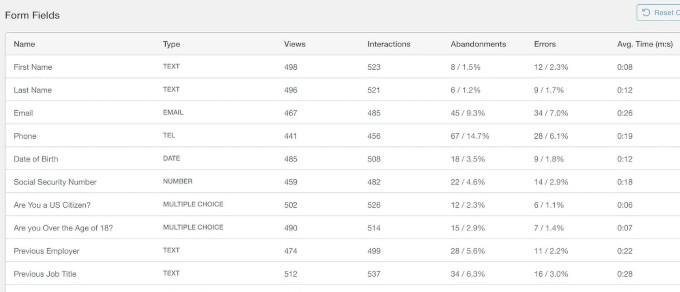
The most powerful feature is the field-level analytics. A field-by-field table shows interactions, time spent, errors, and abandonment for every part of your form. That tells you the exact point where people give up.
That might be a phone number field people do not want to fill, or an address field that throws errors. Once you know which one it is, the fix is usually simple: remove the field, reword it, or make it optional.
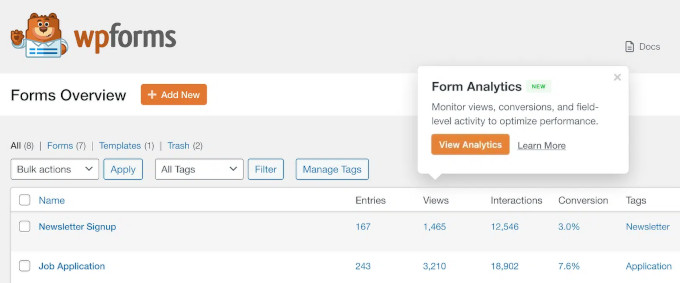
Your All Forms page now shows views, entries, and conversion rate for every form.
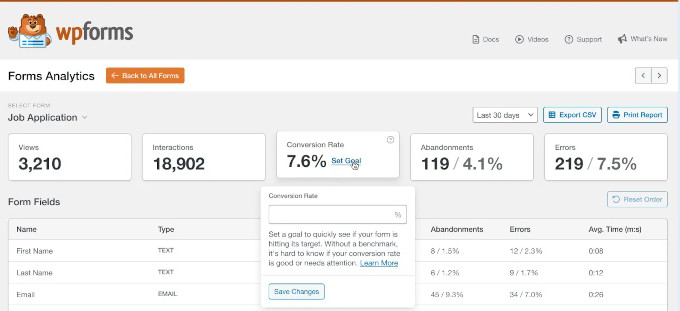
Each form also gets its own dashboard, with filters for the last 7, 30, or 90 days.
There is a built-in AI chat as well. You can ask it what is hurting your conversions, and it reads your form data and tells you what to fix first.
WPVibe Passes 6,000 Installs and Adds Page Builder Integrations, AI Code Snippets, and Memory
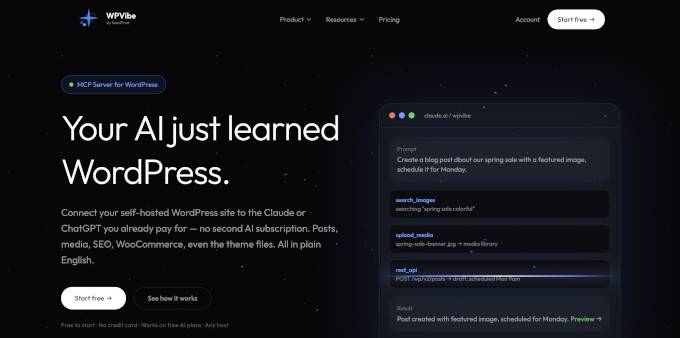
WPVibe, the WordPress MCP server built by SeedProd, has crossed 6,000+ active installs on WordPress.org.
WPVibe lets you manage your WordPress site by simply chatting with your favorite AI assistant. Instead of clicking through admin screens, you describe what you want, and the AI does it for you. It works with Claude, ChatGPT, Codex, Cursor, and more.
Here is what arrived in the last few weeks:
Page builder integrations: Your AI assistant can now automate tasks in Elementor, Divi, SeedProd, and Beaver Builder.
AI code snippets: Ask AI to write custom code for your site. That removes one of the most intimidating parts of WordPress for non-developers.
Memory: WPVibe remembers how you like to run your site, so you don’t have to repeat yourself.
AI recipes in your dashboard: WPVibe suggests ready-made automation ideas picked for your site.
We believe that WPVibe is one of the more practical answers to the question of what AI can actually do for WordPress users. It handles the repetitive admin work, and you stay in control.
WordPress Ships Major Security Fixes
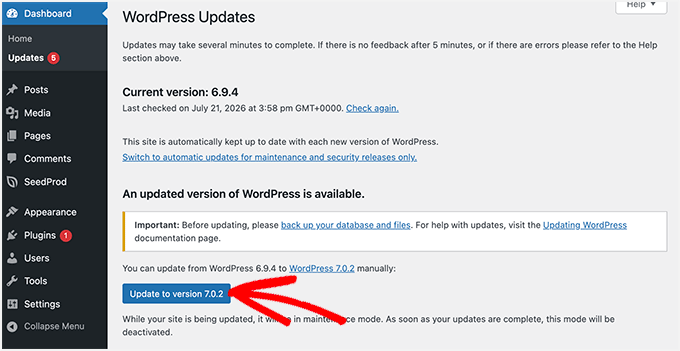
WordPress 7.0.2 came out on July 17 as a security release that fixed one critical and one high severity issue. Because of the severity, the WordPress.org team turned on forced updates for affected sites, so many sites are already patched.
The two security issues allow code to run on a default install without anyone logging in. Both are now in CISA’s catalog of known exploited vulnerabilities, so it is worth confirming your version rather than assuming.
Head over to Dashboard » Updates and check the version you are on. If it reads 7.0.2, 6.9.5, or 6.8.6, then your website is fine. Otherwise, we recommend updating your website now.
7.0.2 also includes the earlier 7.0.1 maintenance release and its 31 bug fixes across Core and the Block Editor, so a single update gets you both.
HelpJet: The AI Chatbot That Answers Your Customers’ Questions in Seconds
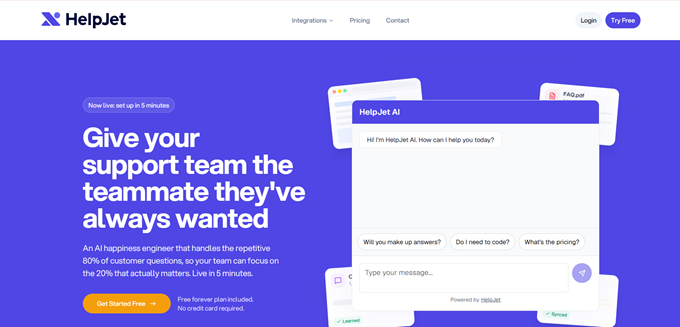
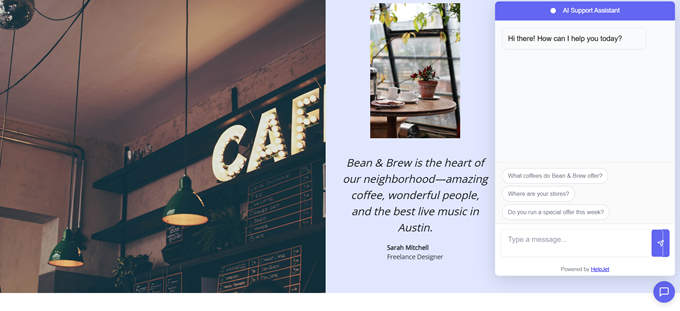
HelpJet is a new AI support chatbot built by the team at HeroThemes, a WPBeginner Growth Fund company. It learns your help documentation and answers customer questions from it, 24/7, without needing anyone on your team to be online.
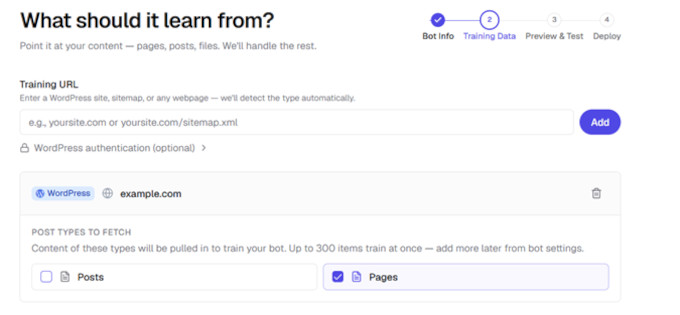
Setup is simple. You add your help articles, URLs, and even private standard operating procedures, and the chatbot is ready in about five minutes.
From there, it takes the repetitive questions off your team’s queue. Anything it cannot answer is passed to a human. HelpJet then learns from that reply, so it can handle the same question next time.
On a WooCommerce store, it can also read your product data, including variations, stock levels, and shipping and tax rules. So a shopper asking about a specific product gets a real answer, not a link to your policy page.
You can customize the chatbot and display it with no code required. It also runs on Shopify and Squarespace.
AIOSEO Introduces SEO Alerts: An Early Warning System for Site Issues
Serious SEO problems rarely announce themselves.
For example, a plugin update can quietly set your homepage to noindex, which tells search engines not to list it. Or your robots.txt file may stop responding after a server migration, and Google pauses crawling until it can read the file again.
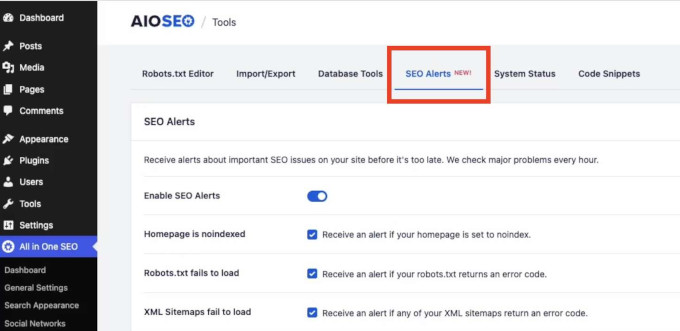
To solve this, All in One SEO, one of the most popular WordPress SEO plugins, has introduced SEO Alerts, which checks three things every hour: whether your homepage is set to noindex, whether your robots.txt file is reachable, and whether your XML sitemap is loading.
You can receive alerts by email or Slack. You configure it once, and AIOSEO monitors your site from there, so you hear about a problem within the hour instead of weeks later. SEO Alerts is free on every plan, including the free AIOSEO Lite version.
AIOSEO has also introduced Event and Job posting schema, available in all paid plans, starting with Basic. This schema is code that helps search engines show your events and job listings directly in search results.
ActiveLayer Launches for Easy Digital Downloads
ActiveLayer, the new AI spam protection service, has launched its Easy Digital Downloads integration. It checks product reviews and new customer registrations as they are submitted, and blocks the ones it scores as spam.
That matters most for reviews, since spam ones drag down the star rating shoppers see in Google. Reviewers who already bought the product skip the check, and checkout is not affected.
ActiveLayer also covers WordPress comments, the major form plugins, and signups on WooCommerce and membership platforms.
In Other News
404 to 301 is a complete and free redirect manager and 404 error monitor for WordPress. You can build custom redirects with exact, prefix, or pattern-based (regex) matching, send every remaining 404 to a page you choose, and keep a full log of broken links hitting your site. Optional email alerts tell you the moment a URL starts getting hit.
WooCommerce 11.0 is now scheduled for release on August 4. The team postponed the original July 28 date after finding a fatal error during release-candidate testing. The update brings performance improvements for larger stores, better customer account and email flows, and improved reporting.
SearchWP improves WordPress faceted search through a new WPFilters integration. Filtering now happens before ranking, so visitors can narrow results by category or post type while SearchWP keeps its relevance ordering intact.
Advanced Coupons adds WordPress Abilities API support in version 4.7.4. You can connect an AI assistant like Claude Desktop and manage your WooCommerce coupons with plain-language requests, and the integration is included in the free plugin.
WordPress.tv is now on Apple TV. Automattic released a free app that brings thousands of WordCamp talks, tutorials, and community sessions to the big screen. It is a relaxed way to learn WordPress from the people who built it.
AIOSEO’s Broken Link Checker now detects dead YouTube and Vimeo videos on its paid plans, not just broken URLs. A deleted video still returns a healthy status code, so standard link checkers never notice, while your visitors see a black box where a tutorial used to be.
WordCamp US 2026 is heading to Phoenix, Arizona, on August 16-19. Tickets include Contributor Day, Showcase Day, and two conference days with more than 50 talks and workshops.
SaveTo Wishlist added a WooCommerce Gift Registry extension, so shoppers can turn any wishlist into a shareable registry for weddings and baby showers. A separate update brings default wishlists for new customers, Abilities API support, and on-demand analytics syncing.
WooCommerce shared its plans to focus most of its product and engineering teams on the core plugin for the next three months. The team is re-reviewing a backlog of over 2,300 open issues and 500 pull requests, most of them filed by merchants and developers.
WordPress 7.1 Beta 4 is ready for download and testing. As always, use a staging or local site rather than a production website. The final release is expected on August 19 at WordCamp US. For a detailed overview, see our article What’s coming in WordPress 7.1.
New Tools & Plugins
HelpJet: An AI support chatbot that trains on your docs and answers customer questions 24/7. Works with WordPress, WooCommerce, Shopify, and more.
ActiveLayer: AI-powered, server-side spam protection, now with native support for Easy Digital Downloads reviews and registrations. No CAPTCHAs required.
WPVibe: Connect your WordPress site to Claude, ChatGPT, Cursor, and other AI assistants. Now with page builder integrations, AI code snippets, and memory.
LedgerPort: A QuickBooks connector for WooCommerce and Shopify stores that matches your books to the payouts that actually hit your bank account.
That’s everything for this month. A security update to install, smarter analytics to explore, and a few new AI tools worth testing on a staging site.
If there is a story or a plugin you think we should cover in the next issue, then we would love to hear about it. Reply and let us know, and we will see you in the next Spotlight.
If you liked this article, then please subscribe to our YouTube Channel for WordPress video tutorials. You can also find us on Twitter and Facebook.
https://www.studiogiarola.it/wp-content/uploads/2026/05/logo-giarola.png00Albertohttps://www.studiogiarola.it/wp-content/uploads/2026/05/logo-giarola.pngAlberto2026-08-01 10:21:482026-08-01 10:21:48WPBeginner Spotlight 26: Form Analytics, More AI Tools, and Smarter SEO Monitoring
There’s also a #ceo Slack channel where anyone can drop in and request a meeting, which my esteemed colleague Damianne President did, and this morning we had an interesting chat that set my mind racing about how we might engineer happiness in the future.
One overriding assumption: Personal agents will trounce company agents in most cases.
Your personal agent can — or soon will — know all your history, your calendar, your email, your preferences, and your photos, and it speaks your language. So much time is wasted in traditional support trying to see through the customer’s eyes, or authenticate them. That goes away, but watch your thinking! It’s so easy to fall into the mental model trap of legacy chatbots and data models.
As a company, your website, your WordPress, documentation, tutorials, menus, manuals need to be amazing and up to date. That’s the source of truth, and an agent will read all of it!
The interface and APIs remain because that’s useful to both human visitors and the agents.
Whenever possible, make support public. More blogs and bbPress. I actually weep a little when I think of how many beautiful words are written by our Happiness Engineers that are only ever seen once in a chat box or email thread.
My goal with our products is that support is radically available, and you almost never have to use it.
If you’re in a support role, I think you can pick a lane based on where you get energy.
If you love looking at screens, I think there’s a future where customer service wizards are watching over an Iron Man-like interface, armies of chat bots talking to people, where they can see how they’re going and intervene or nudge them as needed. There’s a ton of work in tuning agents and interactions.
If people recharge you, I actually think this will be the greatest era. All of the basic, mechanical stuff will be automated, but I think human connection will be what economists call a Veblen good, more in demand even as it is more expensive.
I think Happiness Engineering in the future will look a lot more like community building. A bot can’t host a meetup or a WordCamp.
I was the biggest Waymo fanboy, but this year with lots of trips to and from hospitals with Om I found myself craving human connection and used Uber more than ever. (It also gave me a chance to practice the one repeatable way that money can buy happiness, which is keeping a couple Benjamins in your back pocket and surprising people with them.)
https://www.studiogiarola.it/wp-content/uploads/2026/05/logo-giarola.png00Albertohttps://www.studiogiarola.it/wp-content/uploads/2026/05/logo-giarola.pngAlberto2026-07-31 10:16:452026-07-31 10:16:45Matt: Possible Futures of Happiness
Potremmo richiedere che i cookie siano attivi sul tuo dispositivo. Utilizziamo i cookie per farci sapere quando visitate i nostri siti web, come interagite con noi, per arricchire la vostra esperienza utente e per personalizzare il vostro rapporto con il nostro sito web.
Clicca sulle diverse rubriche delle categorie per saperne di più. Puoi anche modificare alcune delle tue preferenze. Tieni presente che il blocco di alcuni tipi di cookie potrebbe influire sulla tua esperienza sui nostri siti Web e sui servizi che siamo in grado di offrire.
Cookie essenziali del sito Web
Questi cookie sono strettamente necessari per fornirvi i servizi disponibili attraverso il nostro sito web e per utilizzare alcune delle sue caratteristiche.
Poiché questi cookie sono strettamente necessari per fornire il sito web, rifiutarli avrà un impatto come il nostro sito funziona. È sempre possibile bloccare o eliminare i cookie cambiando le impostazioni del browser e bloccando forzatamente tutti i cookie di questo sito. Ma questo ti chiederà sempre di accettare/rifiutare i cookie quando rivisiti il nostro sito.
Rispettiamo pienamente se si desidera rifiutare i cookie, ma per evitare di chiedervi gentilmente più e più volte di permettere di memorizzare i cookie per questo. L’utente è libero di rinunciare in qualsiasi momento o optare per altri cookie per ottenere un’esperienza migliore. Se rifiuti i cookie, rimuoveremo tutti i cookie impostati nel nostro dominio.
Vi forniamo un elenco dei cookie memorizzati sul vostro computer nel nostro dominio in modo che possiate controllare cosa abbiamo memorizzato. Per motivi di sicurezza non siamo in grado di mostrare o modificare i cookie di altri domini. Puoi controllarli nelle impostazioni di sicurezza del tuo browser.
Altri servizi esterni
Utilizziamo anche diversi servizi esterni come Google Webfonts, Google Maps e fornitori esterni di video. Poiché questi fornitori possono raccogliere dati personali come il tuo indirizzo IP, ti permettiamo di bloccarli qui. Si prega di notare che questo potrebbe ridurre notevolmente la funzionalità e l’aspetto del nostro sito. Le modifiche avranno effetto una volta ricaricata la pagina.
Google Fonts:
Impostazioni Google di Enfold:
Cerca impostazioni:
Vimeo and Youtube video embeds:
Privacy Policy
Puoi leggere i nostri cookie e le nostre impostazioni sulla privacy in dettaglio nella nostra pagina sulla privacy.


 The latest episode is
 Santos flags it as an experiment as it overwrites theme.json in place with no revisions or backups.